1 of 4

14 products

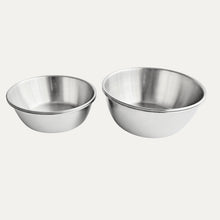
Small 10 cm BPA-free baby bowl – stainless steel

Premium 304 Stainless Steel — The Safest Material for Your Family Table

Say goodbye to the soapy aftertaste of plastic and the chemical uncertainty of coated bamboo. We use food-grade 304 and 316-grade stainless steel because it is non-porous, naturally non-toxic, and completely inert, meaning it never reacts with food, never absorbs odours, and never degrades in the dishwasher. The same material that lines surgical instruments and commercial food production lines is now on your family table, in forms designed to be as beautiful as they are safe.

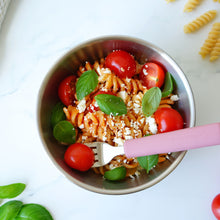
Non-toxic toddler feeding set with steel snack box and pink sippy cup

From School Snacks to Family Dinners — Stainless Steel for Every Moment

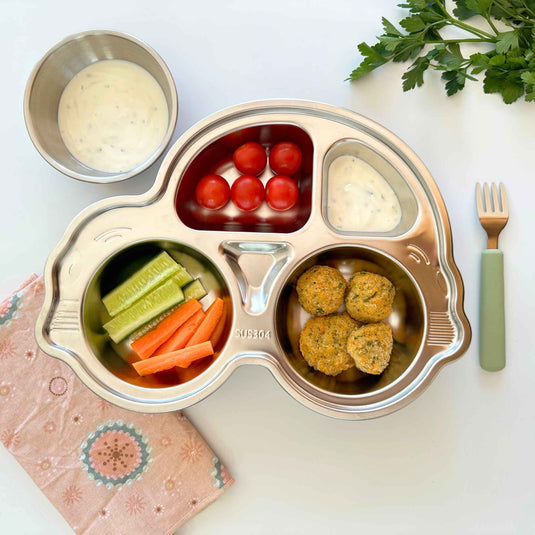
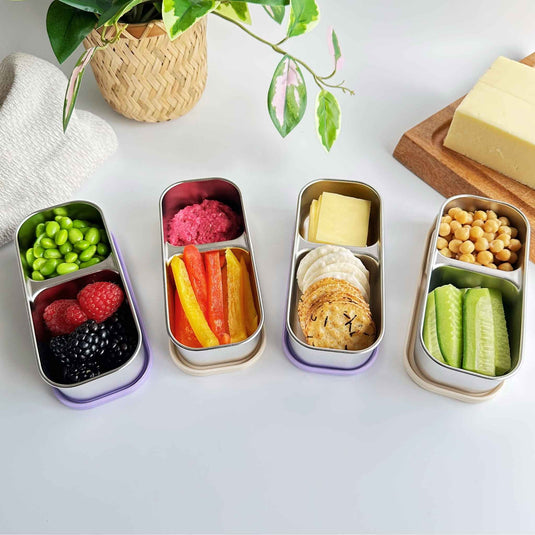
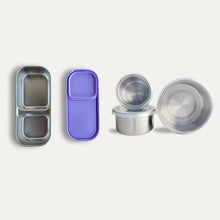
Our range is built around the reality of Australian family life, not a Pinterest ideal of it. The 2-compartment snack box that survives the kindy bag. The divided plate that keeps foods separated for sensory-sensitive eaters. The sippy cup that transitions from spout to straw to open cup as your baby grows. The nesting food storage containers, that replace the entire plastic Tupperware drawer. Each product solves a specific problem, and every single one eliminates plastic from another corner of your home.

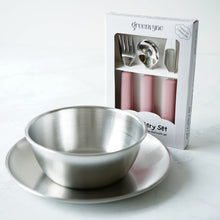
unboxing kids stainless steel tableware & wash before first use - Greenvyne

Built to Last a Lifetime — Because the Greenest Product Is the One You Never Replace

We design for longevity because we believe sustainability is not a feature; it is the foundation. Our stainless steel homewares will outlast hundreds of plastic replacements. They will not crack, warp, stain, or leach, not in year one, not in year ten. Paired with our plastic-free packaging, every Greenvyne order is a step away from the cycle of buy-use-discard that plastic demands. This is what a plastic-free home actually looks like: fewer products, higher quality, built to be passed down.

Are Greenvyne products safe for babies and toddlers?

Yes, and we test specifically to prove it. For products designed for children up to 36 months, we test to EN 14372:2004, the European standard for the safety of children's cutlery and feeding utensils. This covers both mechanical safety (sharp edges, small parts, drop impact, tensile stress) and chemical safety (migration of elements, phthalates, nickel release and volatile compounds). It is a more rigorous child-specific standard than general food contact testing alone, and it applies across our cutlery sets and children's dinnerware range. Our full quality and safety documentation is available on our Quality & Safety page.

What stainless steel products does Greenvyne sell?

Our current range includes kids' divided stainless steel plates, 20cm meal plates, stainless steel bowls, 3-piece kids' cutlery sets, 3-in-1 stainless steel sippy cups, 350ml stainless steel cups, 2-compartment stainless steel snack boxes, nesting food storage containers, silicone suction pads, and starter bundle sets. We are currently expanding into sandwich boxes, dip pots, insulated lunch boxes and a broader range of plastic-free food storage and homewares for Australian families. New products are added regularly. Follow us on Instagram or join our email list to be first to know.

What is the safest material for kids' plates and bowls in Australia?

Food-grade 304 stainless steel (also labelled 18/8) is widely considered the safest and most durable choice for children's dinnerware. It is completely inert, meaning it does not react with food, does not release chemicals when heated, and contains no BPA, phthalates, melamine or coatings that can chip or flake. It is the same material used in professional kitchens, hospitals and food manufacturing facilities worldwide. For context, many "bamboo-fibre" kids' plates are bonded with melamine resin, and most plastic plates carry some chemical risk regardless of BPA-free labelling. Stainless steel has no equivalent concerns under normal use conditions.

What does 304 (18/8) stainless steel mean, and is it food safe?

304 stainless steel, also written as 18/8, refers to an alloy containing 18% chromium and 8% nickel. It is one of the most widely used food-grade steel alloys in the world, recognised as a safe and stable food-contact material under EU Framework Regulation (EC) No 1935/2004, and used extensively in professional food processing, medical, and hospitality environments. The chromium content creates a passive oxide layer on the surface that resists corrosion and prevents the steel from reacting with food under normal conditions. Unlike polymer coatings, 304 stainless steel does not degrade, shed particles, or change composition over time with regular kitchen use. Our cutlery range uses 316-grade steel, which offers even greater corrosion resistance for pieces that face the most frequent use and washing.

What is the difference between 304 and 316-grade stainless steel?

Most of our tableware, plates, bowls and food storage range is made from 304-grade (18/8) stainless steel, which is the gold standard for rust-resistant, food-safe kitchenware. Our kids' cutlery sets use 316-grade steel, often called marine-grade, because it contains molybdenum, which provides superior corrosion resistance for items that face the most intensive daily use, repeated washing, and contact with acidic foods. In practical terms, both are completely food-safe, both are non-toxic and BPA-free, and 316 is simply the more durable choice for the items that need it most.

Is Greenvyne dinnerware dishwasher safe?

Yes. All Greenvyne stainless steel products are dishwasher safe. We recommend placing items on the top rack where possible and avoiding prolonged exposure to high-temperature steam cycles, which can accelerate the discolouration of any stainless steel over time. Standard eco dishwasher detergent is fine. If you notice any water spotting after dishwashing, which can occur with hard water, a quick wipe with a dry cloth immediately after the cycle finishes will prevent it. Our products are designed for real daily use, which means daily dishwasher cycles are absolutely fine.

Is stainless steel safe for acidic foods like berries, citrus and tomato-based sauces?

Yes. Food-grade 304 stainless steel is highly resistant to corrosion from acidic foods under normal use conditions. The passive oxide layer formed by the chromium content acts as a barrier between the food and the steel. You can safely pack strawberries, citrus segments, tomato-based dips, and balsamic dressings without any concern about leaching or reactivity. The one exception to be aware of across all stainless steel products generally: avoid leaving highly acidic foods in contact with stainless steel for extended periods (many hours or overnight), not because of safety, but because prolonged acid exposure can cause surface pitting on lower-grade steels over time. Our 304-grade steel is highly resistant to this, but it is a good general habit regardless of brand.

What age is Greenvyne's stainless steel tableware suitable for?

Our range spans a wide age bracket. As a general guide, our 3-in-1 stainless steel sippy cup is suitable from around 6 months (spout stage) through to toddlerhood (open cup stage). Our kids' divided plates and bowls are ideal from around 6–12 months as babies begin solids and self-feeding. Our 3-piece cutlery sets are designed for children from approximately 18 months who are developing self-feeding skills. Our 350ml cups and 2-compartment snack boxes are suitable from toddler age through to school age and beyond, and are equally useful for adults. If you are unsure which product suits your child's stage, our team is happy to help via our contact page.

Where can I buy non-toxic stainless steel dinnerware in Australia?

Greenvyne ships across Australia from our online store at greenvyne.com.au. We offer flat-rate shipping of $14.95 on all Australian orders and free shipping on orders over $129. We are an Australian-owned small business, and all orders are dispatched from Melbourne, Australia. We do not currently sell through third-party retailers. Purchasing directly through our website ensures you receive genuine Greenvyne products with full warranty and customer support.

Are stainless steel snack boxes and food containers better than plastic or silicone?

For longevity, hygiene and chemical safety, food-grade stainless steel is the superior choice. Stainless steel is naturally non-porous, meaning it will never absorb odours, stains, or bacteria the way plastic does over time. It won't warp or degrade in the dishwasher. It doesn't carry the microplastic friction risk that plastic containers do when scratched. Unlike all silicone containers, it has no compression or flexibility that causes the lids and body to lose their seal over the years of use. Silicone has genuine advantages for flexibility and collapsibility, which is why we use food-grade silicone for our lid seals and suction pads rather than for the container body itself. The combination of stainless steel construction with silicone lids and sealing is, in our view, the optimal design for plastic-free food storage.

Can Greenvyne products be used for camping, school lunches and outdoor use?

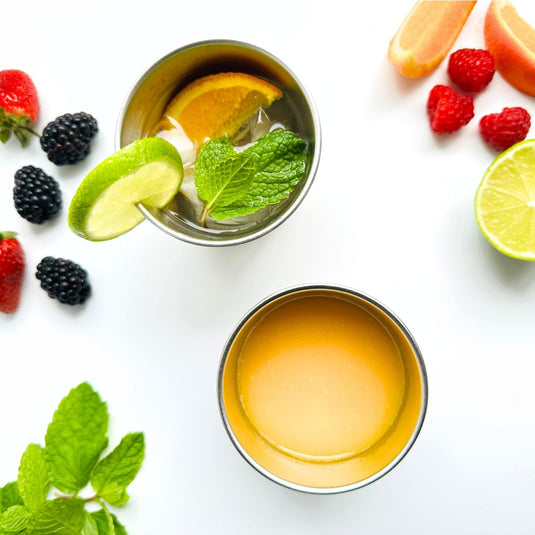
Absolutely, durability and portability are core to how we design every product. Our stainless steel plates, bowls and cups are unbreakable under normal conditions, lightweight enough for school bags and camping packs, and stable enough not to blow off a picnic table. Our snack boxes and food storage containers are designed to be leak-resistant, making them suitable for school lunch boxes, picnic bags, and day packs. The same range that works on your kitchen table works just as well at a national park campsite, a kindy canteen, or a weekend farmers market.