Skip to product information
1 of 12

Stainless Steel Snack Box | 2-Compartment | 200ml

Stainless Steel Snack Box | 2-Compartment | 200ml

Regular price $20.95
Sale price $20.95 Regular price

Choose Your color: Lavender
In stock
Payment methods
  • American Express
  • Apple Pay
  • Google Pay
  • Mastercard
  • PayPal
  • Shop Pay
  • Union Pay
  • Visa
  • Ships next business day from Melbourne
  • Flat Rate Shipping $14.95 | Free Over $129
  • 30 Day Returns*

What You Get

Mixed 4 Pack: 4 x Stainless Steel 2-Compartment Snack Boxes (1x Lavender, 1x Oatmeal, 1x Meadow, and 1x Peony). The complete non-toxic solution for a coordinated, plastic-free school week, perfect for solo explorers or sharing between siblings.

Single: 1 x Stainless Steel 2-Compartment Snack Box in your choice of Lavender, Oatmeal, Meadow, or Peony.

The Details

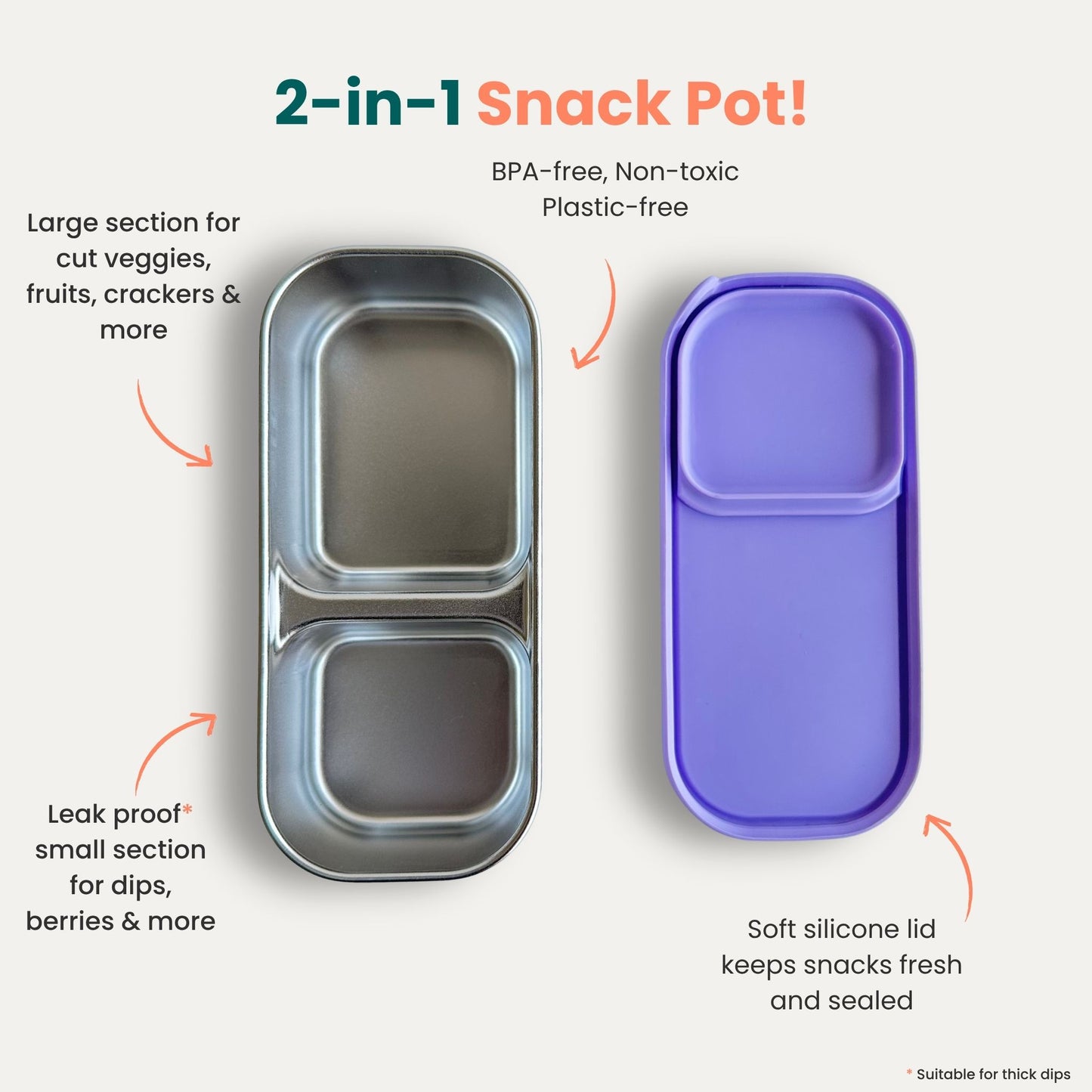
  • Separated Bento Design: Two practical compartments (200ml) keep fruit and crackers perfectly portioned and separate, so snacks stay fresh and crunchy.
  • Leak-Resistant Silicone Lid: Our secure, flexible lid is designed to be leak-resistant for thick snacks like hummus, Greek yogurt, and dips. (Note: Not intended for thin liquids like water or juice).
  • Fits many Lunchboxes: The compact, lightweight design is a perfect lunchbox insert and fits easily into backpacks, nappy bags, or pram organisers for on-the-go snacking.
  • Unbreakable & Toddler-Proof: Crafted from premium 18/8 food-grade stainless steel, this container is shatterproof and built to survive the daily tumbles of daycare and school life.
  • Effortless Cleanup: The smooth, electropolished steel surface and flexible lid are top-rack dishwasher safe, resisting odours and stains far better than plastic alternatives.
  • Eco-Friendly & Plastic-Free: A durable, reusable choice that replaces single-use plastic wrap and zip-lock bags, helping your family reduce landfill waste.

From mastering the Kindergarten morning tea struggle to effortless office snacking, see why this snack box is a favourite for independence and ease of use. Read our Plastic-Free Snacking Guide →

The Bigger Picture

  • Plastic-Free Packaging: Delivered to your door in fully recyclable and compostable materials.
  • Reduces Daily Waste: A durable and reusable alternative to single-use plastic bags, wraps, and containers.
  • Designed for Longevity: Built to last for years of daily use, reducing the need for frequent replacements.
  • A Conscious Material Choice: Crafted from durable 18/8 stainless steel and high-quality food-grade silicone.

Dimensions & Care

Dimensions:

  • With Lid: 14.5cm (W) x 6.6cm (D) x 3.75cm (H)
  • Without Lid: 14.1cm (W) x 6.3cm (D) x 3.5cm (H)
  • Internal (Large): 7.5cm x 5.8cm
  • Internal (Small): 5.4cm x 5.8cm

Capacity: 200ml

Care Instructions:

  • Top-rack dishwasher safe or handwash.
  • Not suitable for use in microwaves or for storing hot foods.

Materials & Certifications

Container: 18/8 (304) Food-Grade Stainless Steel
Lid: Food-Grade Silicone

Learn more about our commitment to high-quality materials on our Quality & Safety page.

Shipping & Returns

Orders are packed and dispatched within 1–2 business days. Express orders are prioritised and dispatched within 24 hours (Mon–Fri).

  • Free standard shipping on orders over $129.
  • Flat rate: $14.95 standard | $25.95 express (Australia only).
  • NZ shipping $25.95 flat rate
  • 30-day returns for peace of mind.

For full details, see our Shipping Policy and Returns Policy.

Stainless Steel Snack Box | 2-Compartment | 200ml

$20.95

Is the snack box leak-proof?

It’s leak-resistant for everyday use and thicker foods like hummus, yoghurt, and sauces. We don’t recommend packing thin liquids like water, soups, soy sauce or juice, as they can seep under pressure or when the container is tilted for long periods.

What is the best reusable snack container for school in Australia?

The best reusable snack container for a school bag combines three practical qualities: a size matched to a snack portion rather than a full meal, a lid that a child can open independently without adult help, and a material that does not stain or smell after fruit, crackers or cheese.

The Greenvyne 2-compartment stainless steel snack box is 200ml, the right capacity for a school morning tea portion. The custom-moulded FDA silicone lid is designed to
peel back with one hand, which matters at kindy and primary school where children need to manage their own morning tea without teacher assistance.

304-grade stainless steel does not stain from fruit juice or absorb the smell of yesterday's cheese. The same box comes out of the dishwasher ready for the next day without any residue. Available in four colours, one per child or one per day of the week, makes packing nutritional snacks easy, minus microplastics.

What size snack container is right for a kindy and school-aged child?

For kinder or primary school morning tea, typically a serve of fruit, crackers and cheese, or a similar snack-sized portion, 150ml to 200ml is the appropriate range.
Large enough for a meaningful snack portion, small enough to open and close easily and fit alongside a sandwich box in a standard school bag without taking up the full bag depth.

The Greenvyne snack box is 200ml with one small one large compartment. Small compartment holds approximately 50ml and larger one hods around 150ml, the right amount for crackers on one side and a dip, cracker and cheese or fruit on the other
without food touching.

For older children from around 10 years with larger appetites, two snack boxes packed separately, one for morning tea, one for afternoon tea, is more practical than one larger single container that needs to be opened twice during the school day. The modular approach means each occasion gets its own right-sized container rather than one oversized box that travels full and comes home half-empty.

Are stainless steel snack containers better than plastic for kids?

For daily school use, stainless steel snack containers outlast plastic equivalents on
every practical measure that matters over a school year.

Plastic snack containers develop staining from fruit and tomato-based foods within
weeks of daily use. The staining is cosmetic but persistent and makes the container look worn quickly. Stainless steel does not stain under any normal food contact condition.

Plastic snack containers absorb odours, cheese, hummus and berries leave a residual smell that does not fully wash out. Stainless steel is non-porous. There is no surface for odours to absorb into.

The microplastic question is separate from the BPA question. Polypropylene containers labelled BPA-free still shed microplastic particles under heat and mechanical stress and may contain BPS. 304-grade stainless steel sheds nothing.

The practical counterargument for plastic is cost, a $5 plastic snack container from the supermarket is cheaper upfront. Over a school year of daily use, when a plastic container typically needs replacing every 12 months, the cost comparison shifts. The Greenvyne snack box is designed to outlast primary school and beyond, with zero microplastics.

Is stainless steel microwave-safe?

While steel reflects microwave energy, some purpose-designed stainless-steel containers can be used in microwaves under strict guidelines. Greenvyne bowls and plates are not microwave-safe. To warm food, transfer it to a microwave-safe glass or ceramic container.

Can I use a discount code with free shipping?

Our system applies one promotion per order. This allows you to use either a discount code or an automatic offer like free shipping—whichever saves you more on the day! This policy helps us keep our product prices fair and continue offering great value shipping for our community.

What is the difference between a snack box and a snack container?

In practice the terms are interchangeable in Australia, both refer to a small reusable container designed for a snack portion rather than a full meal. The distinction that matters more than what brands call it is whether the container has separate compartments to keep foods from touching, and whether the lid creates a reliable seal for moist foods like thick dips and soft fruit.

The Greenvyne stainless steel 2-compartment snack box has a fixed internal divider creating two sections 150ml + 50ml, crackers on one side, dip or fruit on the other. The FDA-certified silicone lid seals both compartments simultaneously. Total capacity is 200ml, sized for a school morning tea or desk snack portion rather than a main meal.

Are stainless steel snack pots worth it compared to plastic?

For daily school use over a full year, yes. The comparison breaks down practically
rather than philosophically.

A plastic snack box from your supermarket costs $5 to $10. It typically stains from fruit and tomato-based foods within a few weeks. It absorbs residual odours from hummus and cheese that do not fully wash out. Most crack or lose their lids within one school year.

A stainless steel snack box may cost you $10 more upfront, but does none of these things. 304-grade steel is non-porous, so no staining, no absorbed odours, no
degradation from daily dishwasher use. The same box that goes in the school bag on the first day of kindy should still be going in on the last day of primary school and beyond.

The BPA and microplastic question is separate. Polypropylene containers, the standard for plastic snack pots, often made of BPS and can shed microplastic particles under heat, mechanical stress and repeated washing. Stainless steel sheds nothing.

Can I use a stainless steel snack box for daycare?

Yes, absolutely and the snack box is particularly well-suited to daycare specifically.
The two practical requirements at daycare are that a child can open the container independently without adult help, and that the container is clearly labelled and easy to identify in a group setting.

The Greenvyne snack box uses a custom-moulded FDA silicone lid designed to peel back with one hand, the same motion a toddler uses to open a book. It is not a clip-close or lever mechanism that requires hand strength or coordination beyond most 2 to 3 year olds.

The four colour options, Lavender, Oatmeal, Meadow and Peony, mean each child can have their own colour, which helps with identification in a shared daycare environment. Write the child's name on a piece of tape on the underside of the container for full identification without marking the steel.

How do I pack a stainless steel snack box for school?

The 200ml 2-compartment format is designed around a standard Australian school snack portion. A practical packing guide:

One compartment for something dry, like crackers, rice cakes, pretzels, dry cereal or similar. The other for something moist, soft fruit, cheese cubes, hummus, thick dip, or cut vegetables.

For younger children at kindy or prep, keep the portions small enough that both compartments are finished at morning or arvo tea rather than half-eaten food coming home. 150ml larger compartment is roughly a small handful of crackers and the smaller 50ml can hold a standard serve of dip or some seeds.

The lid seals both compartments simultaneously. Close firmly until you feel the silicone seat against the rim, it will flex slightly and then lock. For moist foods, keep the box upright in the bag rather than on its side and ask children to eat them first.

Is the sippy cup suitable for breastfed babies transitioning to a cup?

Yes. The soft silicone spout on the spout lid is specifically designed for
babies transitioning from breast or bottle. The soft flexible material is closer to the feel of a breast or bottle teat than a hard plastic spout.

The Raising Children Network recommends introducing an open cup or soft spout
cup from around 6 months alongside solid foods, and moving away from bottles and sippy cups by 12 months where possible. The Greenvyne 3-in-1 cup is designed around this timeline, spout for the early introduction, straw from around 9 to 12 months as the baby develops suction control, open cup from 18 months for the final transition.

Can the sippy cup go in the freezer?

The stainless steel body can be used in the freezer for cold drinks, freezing water or cold liquids in the cup body is safe. Do not freeze the cup completely full as liquids
expand when frozen.

The silicone lids and straw components are also freezer safe. Do not put the assembled cup in a microwave, regardless of whether the cup has been frozen.