Swipe to compare →
| Stainless Steel | Plastic | Glass | Silicone | |
|---|---|---|---|---|
| Food safe | ✓ Inert, non-reactive | △ BPA-free grades available but PFAS, BPS, BPF & microplastic risk remains | ✓ Inert, non-reactive | △ Depends on silicone grade — LFGB, FDA or domestic |
| Microwave safe | △ Some | ✓ Most grades | ✓ Yes | ✓ Yes |
| Dishwasher safe | ✓ Indefinitely, no degradation | △ Warps and clouds over time | ✓ Yes | ✓ Yes |
| Unbreakable | ✓ Dents before it shatters | △ Cracks under stress | ✗ Shatters on impact | ✓ Flexible, does not break |
| Odour resistant | ✓ Non-porous, no residual smell | ✗ Absorbs odours over time | ✓ Non-porous | △ Can retain strong odours |
| Stain resistant | ✓ Does not stain | ✗ Stains from sauces and dressings | ✓ Does not stain | △ Can discolour from strong foods |
| Microplastic risk | ✓ None | ✗ Present under heat and stress | △ With plastic lid | ✓ Minimal |
| Weight | △ Medium | ✓ Light | ✗ Heavy | △ Medium |
| Lifespan | ✓ Decades | ✗ 1–2 years typical | △ 3–5 years | △ 2–4 years |
| Grade matters | ✓ 304 vs 202/204 - ask the brand | — | — | ✓ LFGB vs FDA vs domestic |
Key: ✓ Advantage ·
△ Conditional · ✗ Limitation
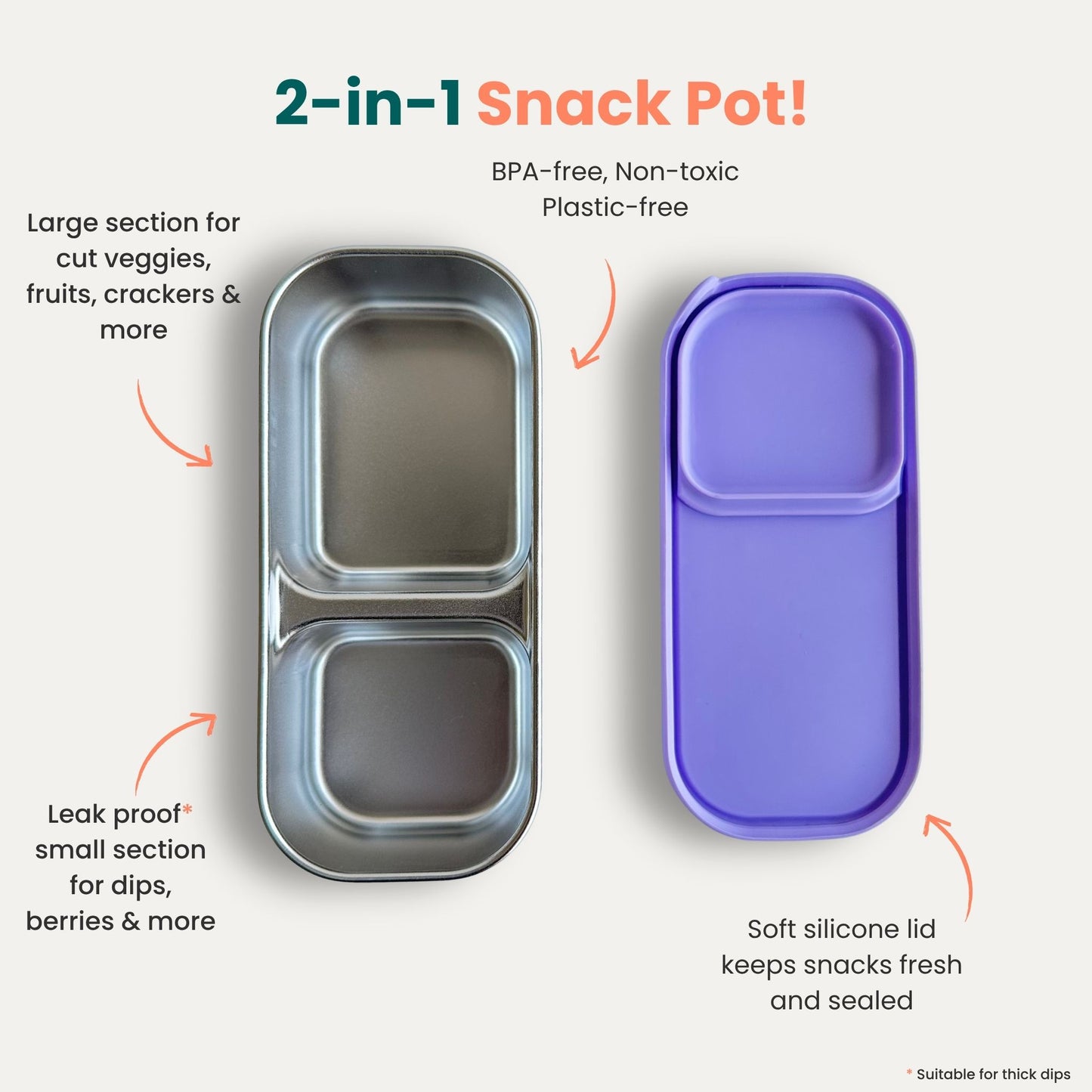
Silicone grade applies to silicone lunch boxes, silicone lids and the silicone seals on stainless steel and glass containers. The three grades: domestic food grade, FDA food grade and LFGB food grade are explained in the materials section below.