Why the Standard Sippy Cup Needs a Redesign

For many parents, the transition from bottle to cup is a milestone fraught with hidden frustrations. Standard plastic sippy cups are notorious for hard-to-clean valves and hidden crevices where mould can thrive unnoticed. Beyond the hygiene concerns, many families are increasingly wary of the chemicals that can leach from plastic when exposed to warm milk or acidic juices.

At Greenvyne, we believe a transition cup should be simple, safe, and built to last. As a sustainable brand, we wanted to help parents like you move away from the toxic plastic designs that often end up in landfills after just a few months and the throwaway culture it creates. Instead, we offer a premium alternative that prioritises your child’s health and the longevity of the product. By choosing a material as enduring as 304-grade stainless steel, you are making a choice that respects both your child's well-being and the environment they will grow up in.

304 Grade Steel: The Hygienic Choice for Growing Smiles

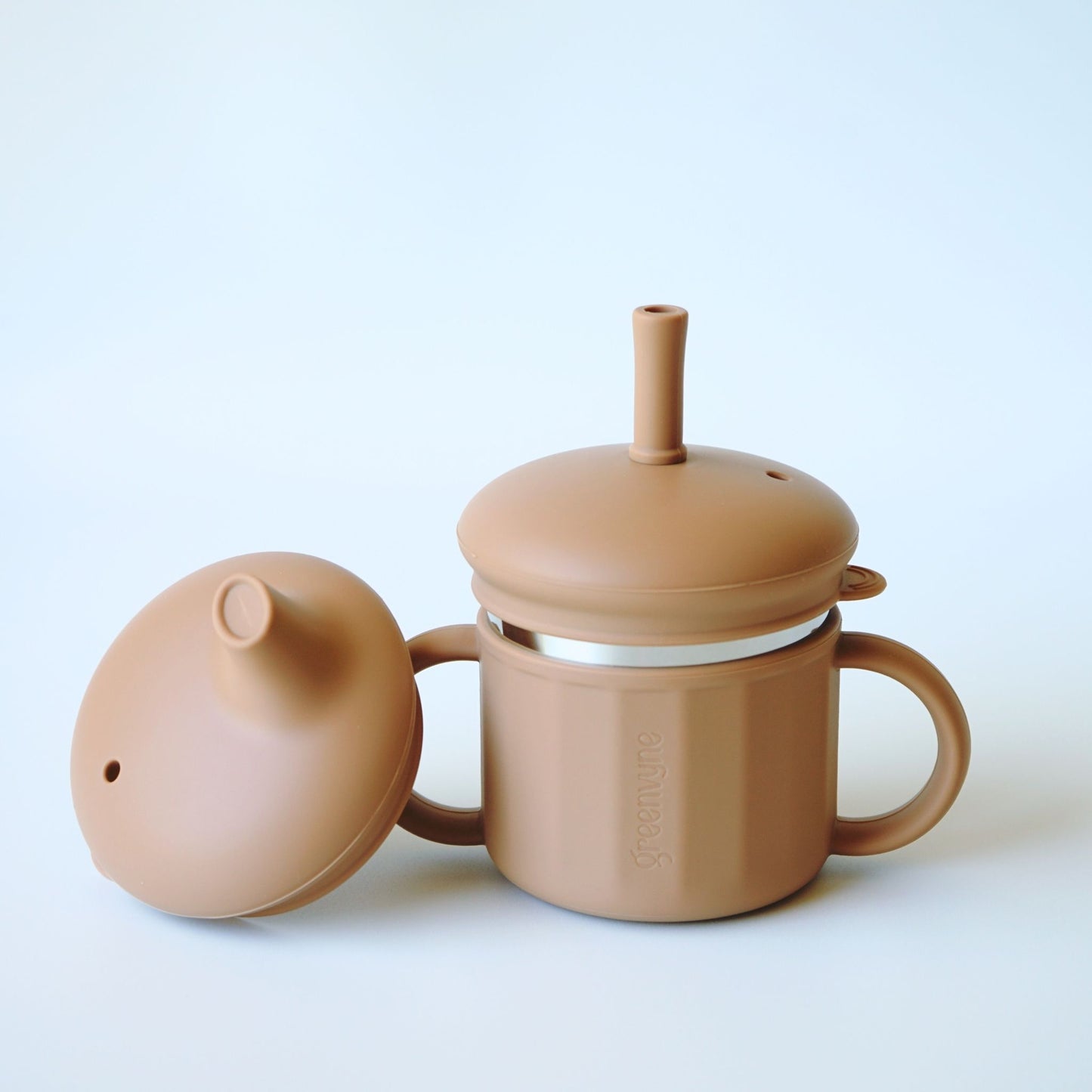
Our Stainless Steel Sippy Cup is the heart of a healthier routine. Made from the same high-quality 304-grade steel as our dinnerware, it is naturally non-porous and odour-resistant. This means it won't retain the smell of milk or the taste of juice, ensuring every sip is as fresh as the first.

The FDA-certified food-grade silicone spout is gentle on developing gums and teeth, providing a familiar comfort as they learn to navigate a "big kid" cup. Unlike plastic, our steel body is practically indestructible. It can survive the inevitable drops and tosses from a high chair without cracking or leaching toxins. It is a premium tool designed for a pivotal stage in your child's development, providing peace of mind for you and a clean experience for them.

The Truth About Microplastics: Most plastic cups and spouts shed thousands of particles when they are chewed, scraped by teeth, or heated in the dishwasher. Read Microplastics Part 1 to understand why we chose a permanent 304-grade steel body and platinum food-grade silicone for our 3-in-1 transition cup.

Versatile Design for Every Stage of Life

While our sippy cups are perfect for the dinner table, they are equally at home in the side pocket of a stroller. The ergonomic handles are designed for small hands to grip with confidence, fostering independence during meal times. When you are out and about, the durability of stainless steel becomes even more apparent. It’s lightweight for travel but sturdy enough to withstand the rigours of a busy family schedule. This is not just a temporary cup: it is a high-performance vessel that transitions seamlessly from the nursery to the park.

Beyond the toddler years, this thoughtful design has found a purposeful home with humans of all ages. The lightweight 304-grade stainless steel and ergonomic double silicone handles make it an ideal choice for assisted drinking for the elderly or those with limited grip strength. We have even heard from customers who found our cups provided a dignified, unbreakable solution for their elderly parents’ daily routines. It is a testament to our belief that high-quality, sustainable design should be accessible and functional for the whole family: from the very first sip to the golden years.

Is stainless steel better than plastic for sippy cups?

Yes. Stainless steel is non-porous and doesn't harbor bacteria or mold like plastic can. It is also free from BPA, BPS, and phthalates, making it the safest material for your child's drinks.

When should my child start using a transition cup?

Most children are ready to begin the transition around 6 to 12 months. Our ergonomic handles make it easy for them to take those first independent sips.

Is it safe to put milk in a stainless steel sippy cup?

Absolutely. In fact, 304-grade stainless steel is one of the best materials for milk. Unlike plastic, which can become porous and trap milk proteins or odors over time, our steel is non-porous and ultra-hygienic. This ensures that your child’s milk stays fresh and the cup remains easy to clean, without the risk of lingering scents or bacteria buildup.

What is the best type of cup for a 6-month-old to start with?

Most experts recommend beginning the transition around 6 months with a cup that is easy to grip and gentle on developing gums. Our stainless steel sippy cup is designed with ergonomic handles for small hands and a soft, food-grade silicone spout. This combination provides the comfort of a bottle with the functional independence of a "big kid" cup, making it the ideal non-toxic starter for 6-month-olds.

Which is better for development: a sippy spout or a straw?

Both can play a role in the transition journey. Many parents find a sippy spout helpful for the very first move away from a bottle because the flow feels familiar to a baby. However, speech pathologists and pediatricians often recommend moving toward straws to help develop essential oral motor skills and tongue positioning.

Because our 220ml Sippy Cup is designed with a versatile lid that accommodates both a spout and a straw, you have the flexibility to follow your child's developmental pace. Once they are ready for the next stage, our larger 350ml Cups (designed for children aged 3 and up) provide a seamless transition into "big kid" tableware that lasts for years.

Why is it recommended to move away from bottles by 12 months?

Leading Australian pediatric specialists, including those featured in the Raising Children Network, recommend that babies start learning to drink from a cup around 6 months and aim to be completely off the bottle by 12 months. This milestone is crucial for supporting healthy dental alignment, preventing "bottle decay," and encouraging the development of speech muscles.

As a sustainable brand, we created our 220ml Sippy Cup to help bridge this gap. It offers a durable, high-quality vessel that feels like a natural upgrade, helping your little one move confidently toward independence while ensuring they are drinking from the safest material possible.

How do I clean the silicone spout?

Our spouts are made from high-grade silicone and are easily removable for thorough cleaning. We recommend a simple warm soapy water wash to keep them hygienic.

Can this cup be used for elderly or assisted drinking?

Yes. While originally designed for toddlers, the ergonomic handles and lightweight nature of our 220ml stainless steel cup make it an excellent tool for the elderly who require a more secure grip. Because the steel is non-porous and easy to sterilise, it is a hygienic and durable alternative to plastic assisted-drinking cups. We are always touched to hear stories from our community about how Greenvyne products are helping maintain independence and dignity for loved ones in all stages of life.

What is the best stainless steel sippy cup for a 6-month-old?

Six months is when most Australian parents introduce a cup alongside solid foods, following guidance from the Raising Children Network and the Australian Dental Association, which both recommend open cup or soft spout cup introduction from around this age rather than waiting until toddlerhood.

For a 6-month-old, the key requirements are a soft silicone spout that does not put pressure on developing gums, handles that support early grip development, a capacity small enough not to be overwhelming, 200ml to 220ml is appropriate at this stage, and materials that are completely free from BPA, BPS and phthalates across every component that contacts the drink or the child's mouth.

The Greenvyne 3-in-1 stainless steel transition cup at 220ml is designed to be introduced from around 4 to 6 months. The soft silicone spout lid suits early sipping, the dual handles support an unsteady grip, and the 304-grade stainless steel body with FDA-certified platinum silicone components contains no BPA, BPS, phthalates or coatings on any food-contact surface. It has been independently tested to EN 14372, the European standard specifically covering children's feeding utensils for children
under 36 months, which tests both chemical safety and mechanical performance.

At 6 months, the spout lid is the right configuration. The cup grows with the child from there, straw lid from around 9 to 12 months, open cup from around 18 months, so the same cup covers the first three years of drinking development without needing replacement.

What is the best sippy cup for milk in Australia?

Milk introduces specific requirements that not all sippy cups handle well. The three
things that matter most for a milk cup are odour resistance, ease of cleaning, and
material safety, because milk residue in hard-to-clean crevices is a hygiene risk, and because warm milk held against plastic or poor-quality silicone components raises the same material migration concerns that apply to any food contact with heat.

Plastic sippy cups used for milk consistently develop a sour residual smell within weeks of daily use, the milk proteins absorb into the porous plastic surface, and no amount of dishwasher cycling fully removes them. This is the most commonly cited reason Australian parents switch to stainless steel cups for milk specifically.

304-grade stainless steel is non-porous. There is no surface for milk proteins to absorb into. A stainless steel cup used for warm milk every morning comes out of the
dishwasher the same way it went in, neutral, odour-free and ready for the next drink.
The same cannot be said for plastic or silicone-bodied cups after prolonged daily milk use.

For milk specifically, the silicone component quality also matters. Milk naturally contains fats that interact with lower-grade silicone over time. FDA-certified silicone, which tests migration of substances from the finished component under realistic food contact conditions, is the standard to look for.

The Greenvyne 3-in-1 stainless steel sippy cup has a non-porous steel body and FDA-certified platinum silicone spout, straw and lid components. It is dishwasher safe, comes apart completely for cleaning with no hidden crevices, and the steel interior does not retain milk odour between washes. For a toddler's daily milk cup, these are the practical qualities that matter most over months of daily use.

What are the top-rated sippy cups for toddlers in Australia?

The most recommended stainless steel sippy cups for Australian toddlers share three
characteristics: a transition system that grows with the child rather than requiring
replacement at each developmental stage, food-grade 304 stainless steel construction rather than plastic or aluminium, and FDA-certified silicone components rather than uncertified silicone with fillers.

What parents in Australia consistently report valuing in a stainless steel toddler cup, based on the most common switching reasons from plastic:

No residual smell after milk or smoothies. Stainless steel is non-porous; it does not absorb odours from previous drinks the way plastic does after weeks of
daily use.

Independence at the right age. A cup that transitions from spout to straw to open cup means the child learns progressively without the parent needing to source a different cup at each stage.

Dishwasher safe with no hidden parts. Sippy cups with complex valve mechanisms are consistently cited as the most frustrating product in the category; mould in crevices that require a specialist brush is a recurring complaint.

The Greenvyne 3-in-1 stainless steel transition cup covers all three. It moves from a soft spout lid for early sipping from around 4 to 6 months, to a straw lid from around 9 to 12 months, supporting mature swallowing patterns as noted by the Raising Children Network, to an open cup top for independent drinking from around 18 months.

Made from 304-grade stainless steel with FDA-certified platinum silicone on all
mouth-contact components. Independently tested to EN 14372, the European
standard for children's feeding utensils under 36 months. Australian-owned, ships
from Melbourne, 220ml - 240ml capacity.